Concrete Slabs & Foundations for Metal Buildings
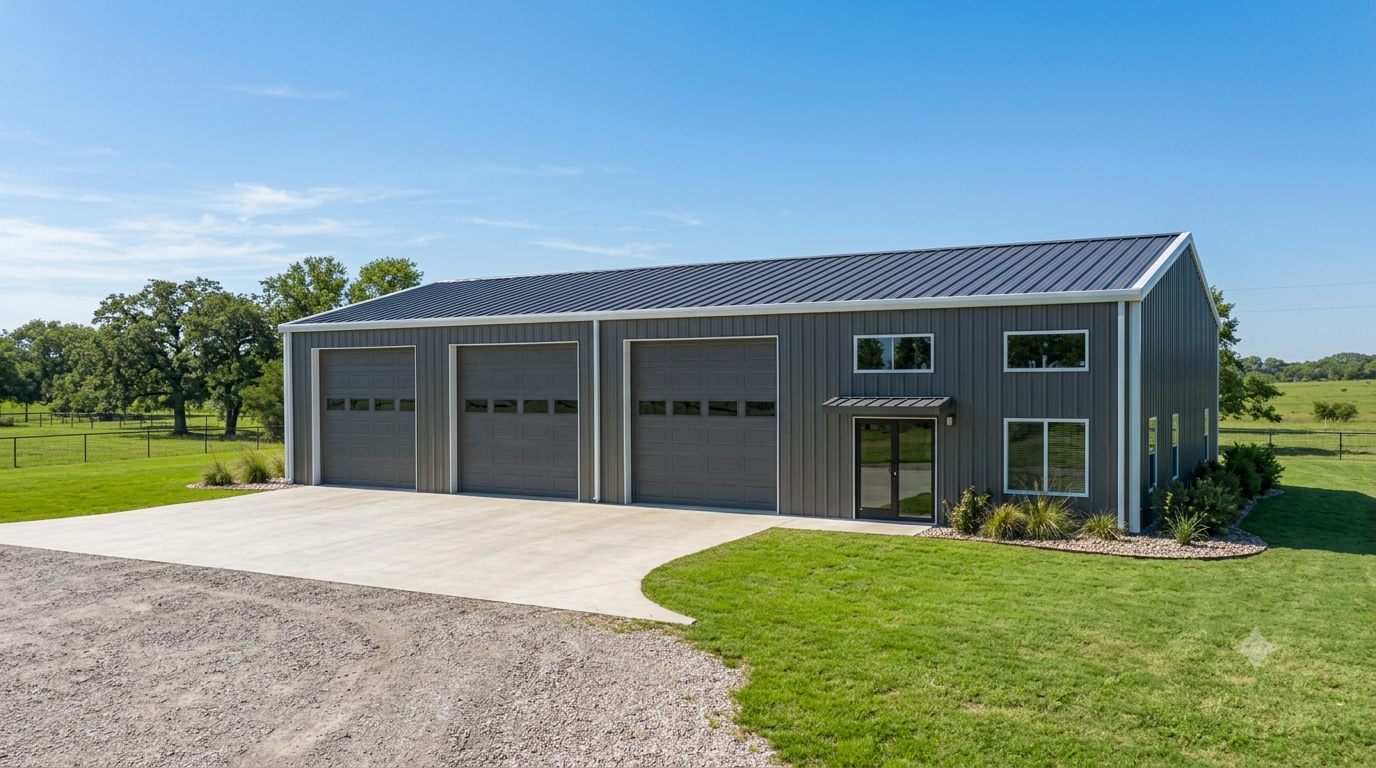
The slab is half the job
A metal building is only as square and durable as what it sits on. Skimping on the foundation is the most common — and most expensive to fix — mistake buyers make.
Texas soil is the variable
Much of Texas sits on expansive clay that swells and shrinks with moisture (the Blackland Prairie, Gulf Coast clays). That movement is what cracks a poorly designed slab. West Texas caliche and Hill Country rock are firmer and often cheaper to build on. A soils report is money well spent on clay.
Common slab approaches
Options range from a standard reinforced slab with a thickened, turned-down edge, to a stiffened or post-tensioned slab on problem clay, to a simpler pour on rock. Bigger and heavier buildings need more reinforcement and thicker edges.
Budgeting the concrete
Slab cost swings with your soil, local ready-mix price, and site prep (leveling, fill, drainage). Our estimator's "installed + slab" option gives a Texas-typical figure — your real number depends on the lot.
Frequently asked questions
- How thick should a metal building slab be?
- A typical residential/shop slab runs 4–6 inches with a thickened perimeter edge and reinforcement; heavier commercial and equipment buildings need thicker slabs and more steel. Your engineer sizes it to the building and soil.
- Do I need a slab for a metal building?
- Not always — some buildings go on piers or a gravel pad — but a concrete slab is standard for shops, garages, and anything you'll finish out. On expansive Texas clay, a properly designed slab is what keeps the building true.
Advertising disclosure: we may earn a referral fee if you request a quote through this link. It never changes your price.How we make money